SOUTH PACIFIC II | Episode 1
“The Birth of Beryl May”
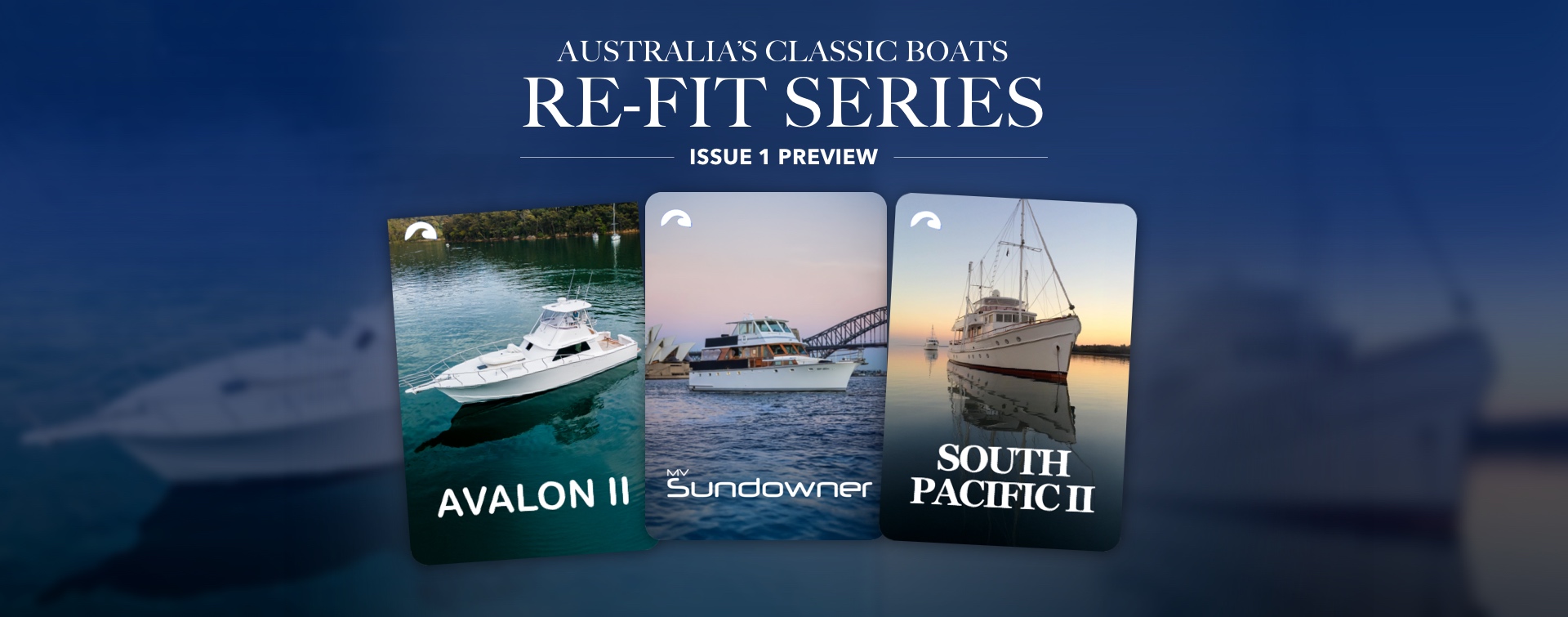
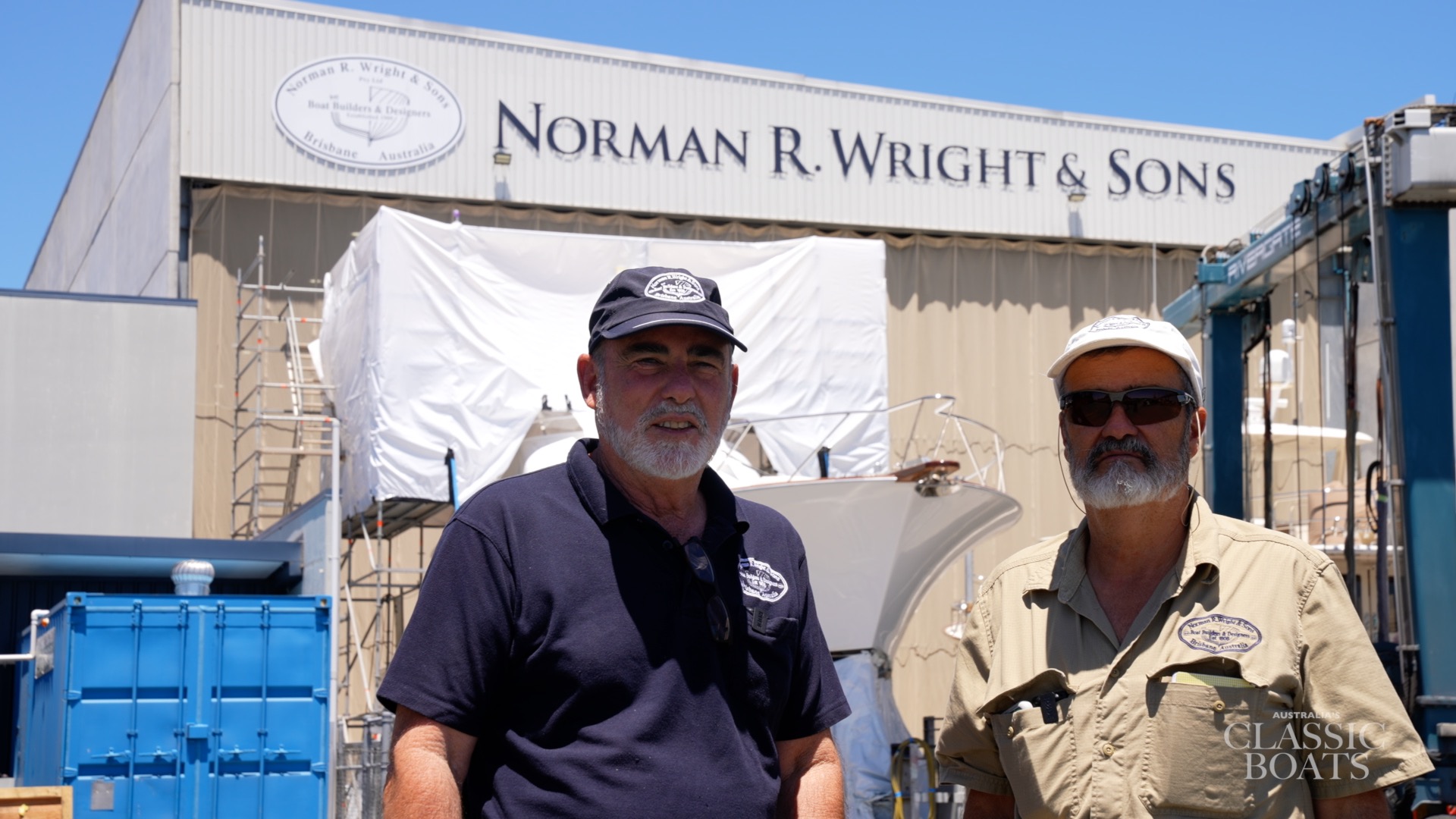
The South Pacific II, formerly the Beryl May II, is one of the most iconic vessels ever to sail Australian waters. This series charts some of her extraordinary story and past adventure, before lifting us into the sheds of the famous Norman R. Wright and Sons, the historic boat building operation where it all began nearly 65 years ago, to document her latest major refit.
Acknowledgements
Our Thanks to Bill & Ian Wright
Ron, Peter & Sally Jenyns & the Jenyns Family ; Rob Siganto & the Siganto family.
Norman R. Wright & Sons for archive photography & plans.
Professional Boat Care for archive photographs and video;
Andrew Harper for use of photograph from Classic Moreton Bay Cruisers (SP2 featured)
Writer & Executive Producer | Nick Cornish
Senior Video Editor | Tristan Davies
Production Team | Tristan Davies, Peter Threlfall, Rod Figueiredo, Ricky Preiser, Jacob Oxlade & Nick Cornish.
Bill Wright:
I do have memories of it being built, I was a little bit older, and Mr. Webb, the person who was the owner, I remember him coming to dinner at home, a very nice gentleman and I remember the boat being launched.
Beautiful Eldridge McInnis design, I’d surmise that Mr. Webb actually probably went to Eldridge McInnis and then bought the design to Dad, where Norman Wright’s to build and again, part of that design, I’m sure influenced Dad with the Bali Hai design.
Lindsay Mee, who was the owner, had obviously seen Beryl May as it was known in those days, and said to my father, I want one like that.
Ian Wright:
Dad had a really good look at South Pacific, and got an owner that let him do what he wanted to do, he got a pretty free reign.
Bill Wright:
But the thing that I always think that the cue from South Pacific to Bali Hai is the hollow heel, it’s a classic trait of that, and then Nimbus had the same hollow heel.
Both Bali Hai and South Pacific II have got those beautiful tumble home transoms, which are just classical, and you do see that on some of the other Eldridge McInnis boats like Black Knight and things like that.
To this day, it still happens. We still build to other people’s designs here, and yet we design for a lot of other builders.
Founded in 1926 in Boston, Massachusetts, Eldridge McInnis designed a broad array of vessels,coming to prominence during World War II with a close association with the US government, including the design of tugs, salvage ships, minesweepers and small transports.
One notable launch was John F. Kennedy’s private 52-foot 30-knot Marlin, which served as a floating meeting room during his presidency, including with members of cabinet during the Cuban Missile Crisis.
The company’s early cruisers were popular for their ease of handling and ability to be driven under sail or power. Amazingly, this design feat made its way into Beryl May also, despite the vessel’s substantial weight and volume. It was a philosophy consistent with Norman R. Wright’s.

Ian Wright:
We’ve always been sailors, first and foremost. I wouldn’t know how to catch a fish if someone put a fishing rod in my hand.
Bill Wright:
Me either.
Ian Wright:
So, I guess we had a great teacher. Dad was very quietly spoken, but he was one of Australia’s best dinghy sailors. And then Uncle Norm. And that’s where you learn your basics, in dinghy sailing. If you can sail a dinghy, you can sail just about anything.
Bill Wright:
If you’re designing really efficient hulls for sailing, boats with motors in, and then reverse the technology around, you end up with extremely efficient motorboats. Which I think the boat yard’s always been renowned for; building boats that go very quickly with very low horsepower, or go a long way with very little fuel usage. So, I think that’s the other side.
Ian Wright:
Yeah, I think, the world’s lost sight of that. But maybe we’re going to come back to it one day.
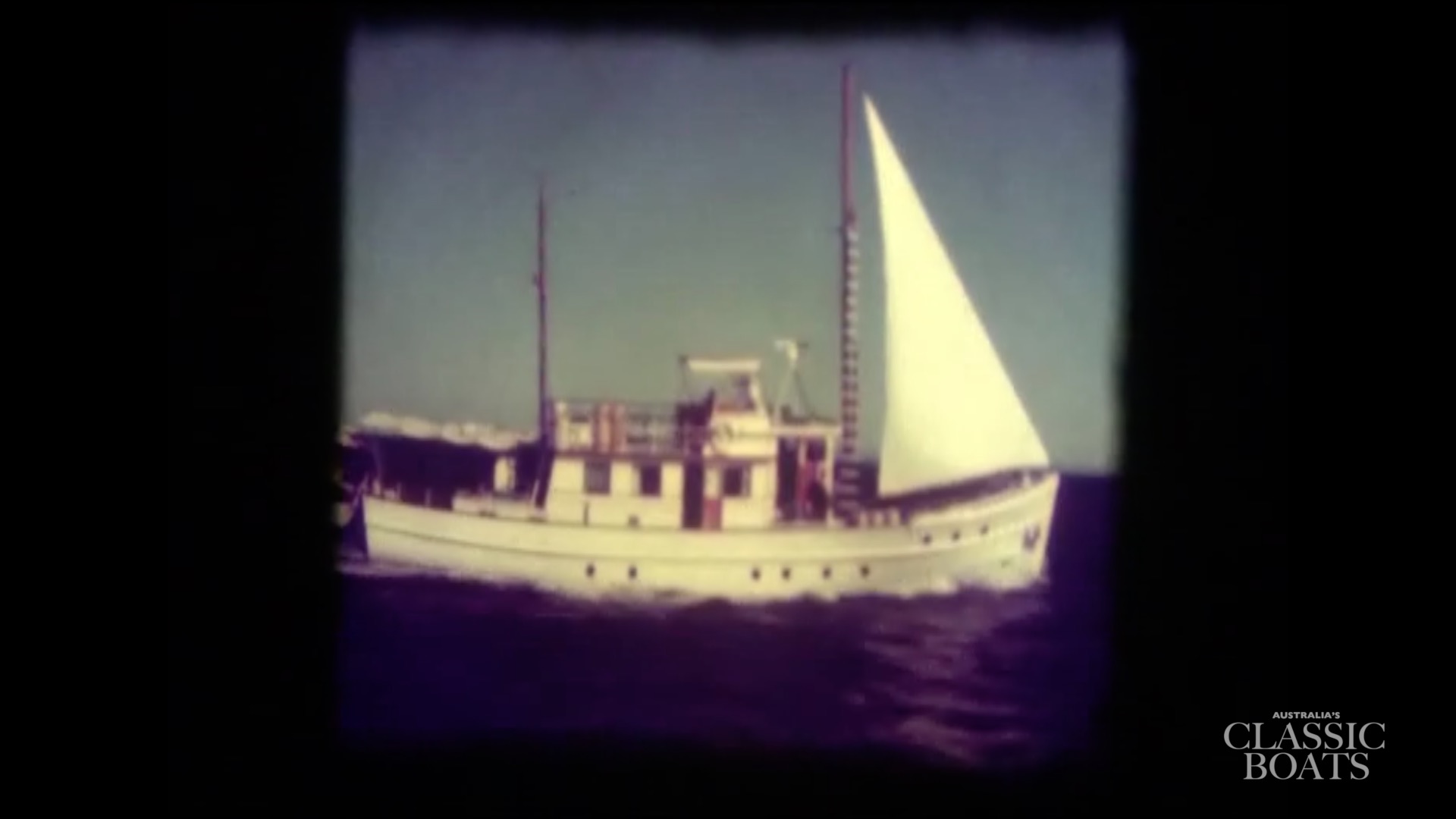
Eldredge McInnis’ later vessels became popular for fishing, where they were known to be designed and engineered to operate efficiently and safely in harsh commercial fishing conditions. This was another quality that the Beryl May would go on to thoroughly validate. Coupled with Norman Wright’s renowned build excellence, arrived a vessel of unique quality.
After two years and one month in construction, the Beryl May II departed the Norman Wright shed at Bulimba, completed at 6pm on the 18th of May 1962.
Bill Wright:
Shortly after it was finished, it left Queensland waters, so we didn’t see it again until the Jenyns bought it basically.
In 1974, Beryl May II was sold to new custodians. A family already decorated in sailing circles with a rapidly growing reputation in fishing, the Jenyns family. Ron Jenyns was a 12-time Australian champion in the finn class of sailing dinghies and a three-time Olympian.
The Jenyns had become interested in motorboats and fishing, with Ron already setting records. Ron encouraged father Herbert Jenyns to take a flight to Sydney and inspect a unique vessel being offered for sale. The rest is history.
Ron Jenyns:
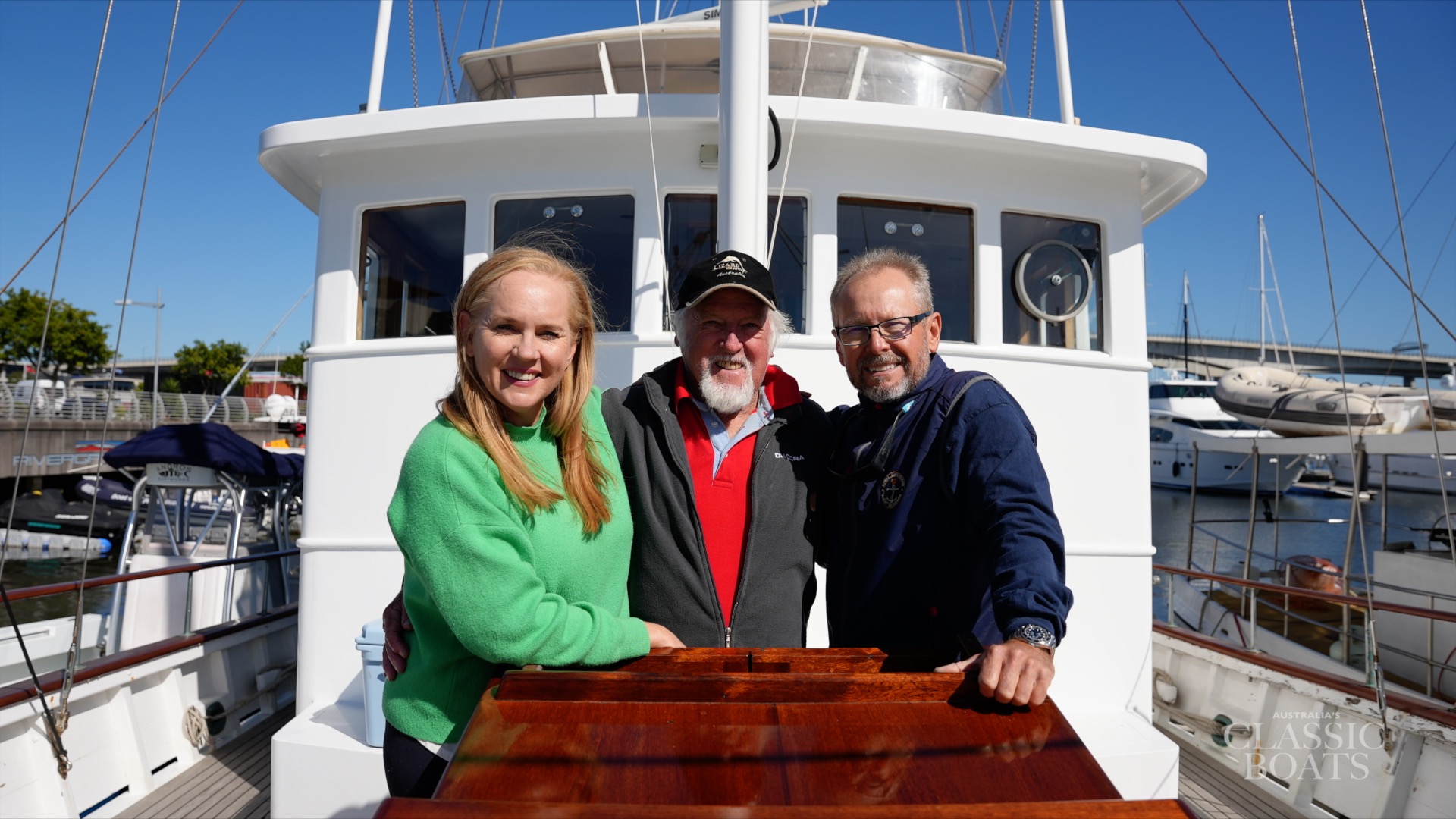
We saw Beryl May was being advertised “by prior” down in Pittwater.
Peter Jenyns:
She was on the Pittwater for sale.
Ron Jenyns:
So down we went, and we looked at the Beryl May. We got her out of the water, had a look underneath. Everything seemed to be good. And so Dad made an offer and you can’t believe it, you know, we bought it for about $400,000.
Peter Jenyns:
That was 1974.
Ron Jenyns:
Yeah, back in 1974. And then we did a major refit on it.
Alongside her first refit, the Beryl May was renamed South Pacific II, a name that held special significance for the Jenyns. The original South Pacific, a beautiful 57-foot Watts and Wright cruiser,came to national attention when it was stolen from the Jenyns’ mooring at Bulimba in Brisbane by two encyclopedia salesmen and a 10-year-old boy. She was repainted, renamed Tiki III and sailed to New Zealand via Lord Howe Island.
An epic tale for another day.

But it was the name South Pacific II for which this boat truly became famous. Ron Jenyns ultimately assumed ownership and the helm from father Herb and established one of the most prolific and renowned game fishing, mother ship and charter operations in Australia.
Sally Jenyns:
The South Pacific was the game fishing operation and the mother ship and the business side and Dad and I shared a decade of working together in the Marlin season. But the other part of that is that she was also our family boat. Every holiday was down the bay on the South Pacific. So, such a huge part of our childhood.
Peter Jenyns:
Great upbringing. It shaped our lives really.
Sally Jenyns:
Totally.
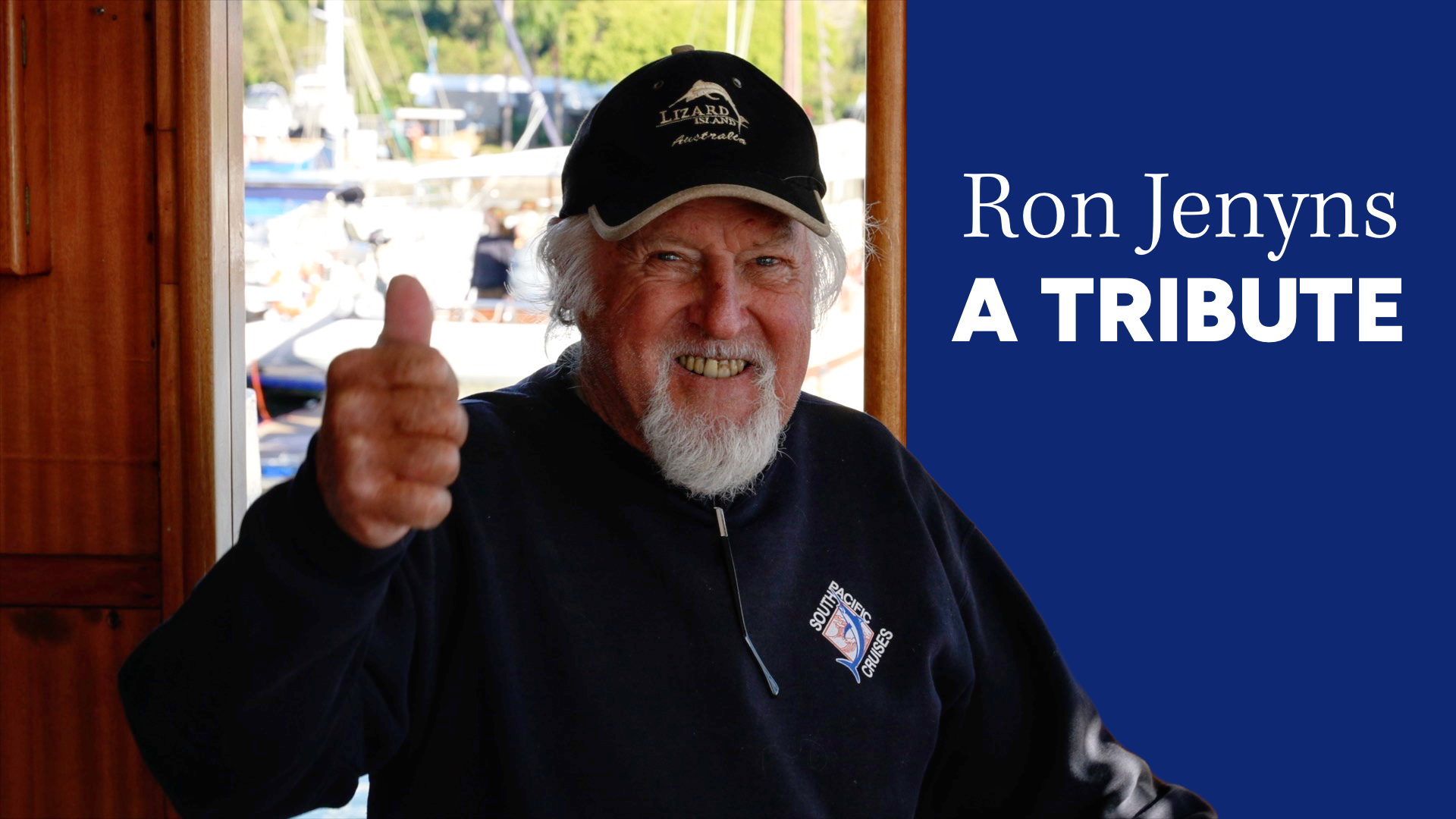
Captain Ron and the South Pacific II became an irrepressible duo, an instantly recognisable fixture in Moreton Bay and on the Great Barrier Reef where Ron became a pioneering and widely respected figure.
Peter Jenyns:
It is such a unique fishery up there and at that time most of the boats were day-tripping in and out of Cairns.Most of them only probably did 15 knots at best. It’s a two or three hour run to the grounds and a run home again. So putting a mother ship out behind the reef just was a game changer. And of course, you know, it’s a quite a thing now.
Ron Jenyns:
The thing was the Marlin come into feed on the edge of the Barrier Reef near sun down and the number of big fish that were being caught by us and another mother ship there, the word got around and game boats changed then. They looked for mother ships rather than running in and out every day. They tie up to a mother ship, have a great chef and enjoy the comfort. The sunset. And convenience.
Sally Jenyns:
Yeah, fish ‘til sunset. That was a big thing, yeah.
Peter Jenyns:
You could fish until late. The five o’clock bite.
With her Oregon timber top sides, beach decks and a ribbon maple interior, the boat is steeped in Australian boat building history.
Peter Jenyns:
So when the Maheno — which is that famous wreck on Fraser Island’s East Coast beach — when she went aground and ended up on the beach at Fraser, Ron Wright took off up there and he collected all the timber door handles off the Maheno. We’ve always had the timber door handles from the Maheno on this boat, these lovely cedar handles.
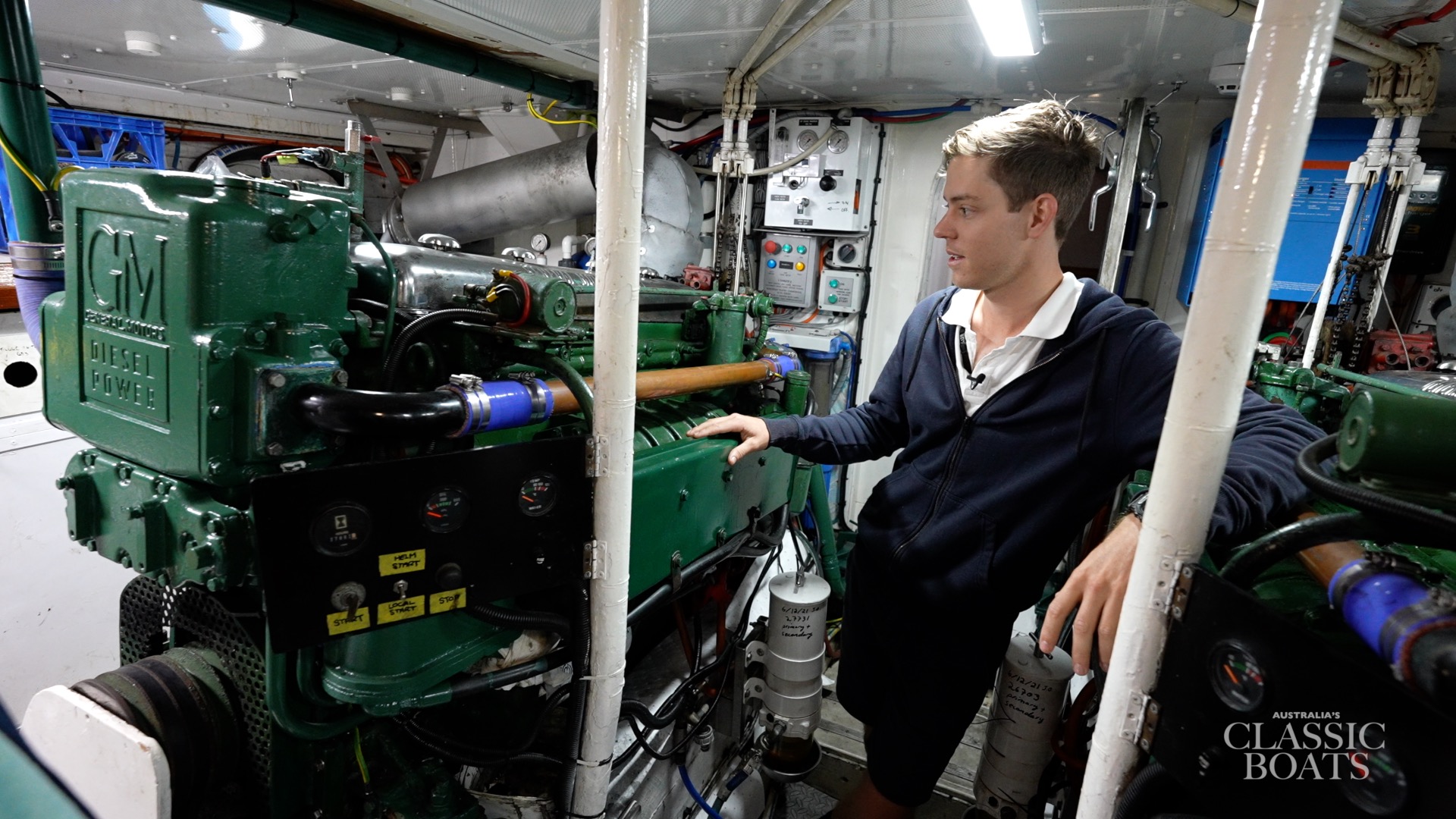
Right up until her final refit, South Pacific II was powered by her original engines, twin GM671Es producing 150 horsepower each. A robust and reliable match to what remains an incredibly efficient hull to this day.
Ron Jenyns:
The vessel has about a nine knots cruise speed, only running at about 1300 RPM. They’re a two stroke diesel and those engines, if you put a larger injector in them, they run at 1800 RPM. And at nine knots, she’s burning very little, she’s very efficient.
Bill Wright:
And I still use all of the data from all those boats when we’re designing, to their benchmarks. So when we’re checking off efficiencies, we can see how we lay in the efficiency area to make sure that hopefully we’re 10% better than its nearest rival in fuel consumption for speed.
Ron Jenyns:
So the engines are just, they’re loafing more or less.
Peter Jenyns:
And even towing the game boat, we only lost half a knot or so, maybe a knot. Yeah, remarkable motors.
Sally Jenyns:
But how good was being on the bow while we were travelling with the jib. Oh, we just sit out there and go, “this is just perfect!”
Ron Jenyns:
Well, there’s no engine noise when you’re right up on the bow there. It’s just the noise of the sea breaking around you. Beautiful.
In 2014, after 40 years of adventure in the Jenyns family, the time inevitably came for Ron to sell her.
Ron Jenyns:
It was a very emotional time, but I reached the point where she needed quite a bit of money spent on it. And when you retired for quite a few years, your wife looks at you,
“What are you going to do with spending a lot more money on that boat?”
I said “No, I think the time has come when I’ve got to sell it.”
And we’re so lucky to have someone buy the vessel and then spend considerable money on a complete refurbish of it. He seems to be very committed to the boat and I’m so happy to see that. And she’s good for another 30, 40 years, I reckon.
Peter Jenyns:
And these boats, you know, you own it for a period. You’re the guy maintaining it and looking after it, and then the next guy gets it. And yeah, it was great when Rob bought it because he’s the next guy that’s going to do it.
Rob Siganto:
Like most people in Brisbane, I’d been on an SP2 as a charter guest in the 90s. We did a fishing trip out here on Moreton Bay and I’d met Ron, but never would have dreamed in 20 years time I would have been the owner of this boat. We ended up buying the boat in 2014. So, knew of it and knew its history. And then the opportunity came up in 2014 and the boat had been for sale for a while, I think. And for me, it was a pretty impulsive sort of buy. I wasn’t actually in the market for it, but it was available. And I told my wife and said,
“We’re going to buy this 72-foot old Moreton Bay cruiser.”
And she said, “Oh, you’re crazy.” Which she normally does with my ideas… And before we knew it, we bought it. We just went ahead and bought it and it’s been great. It’s been a fantastic experience.
Sally Jenyns:
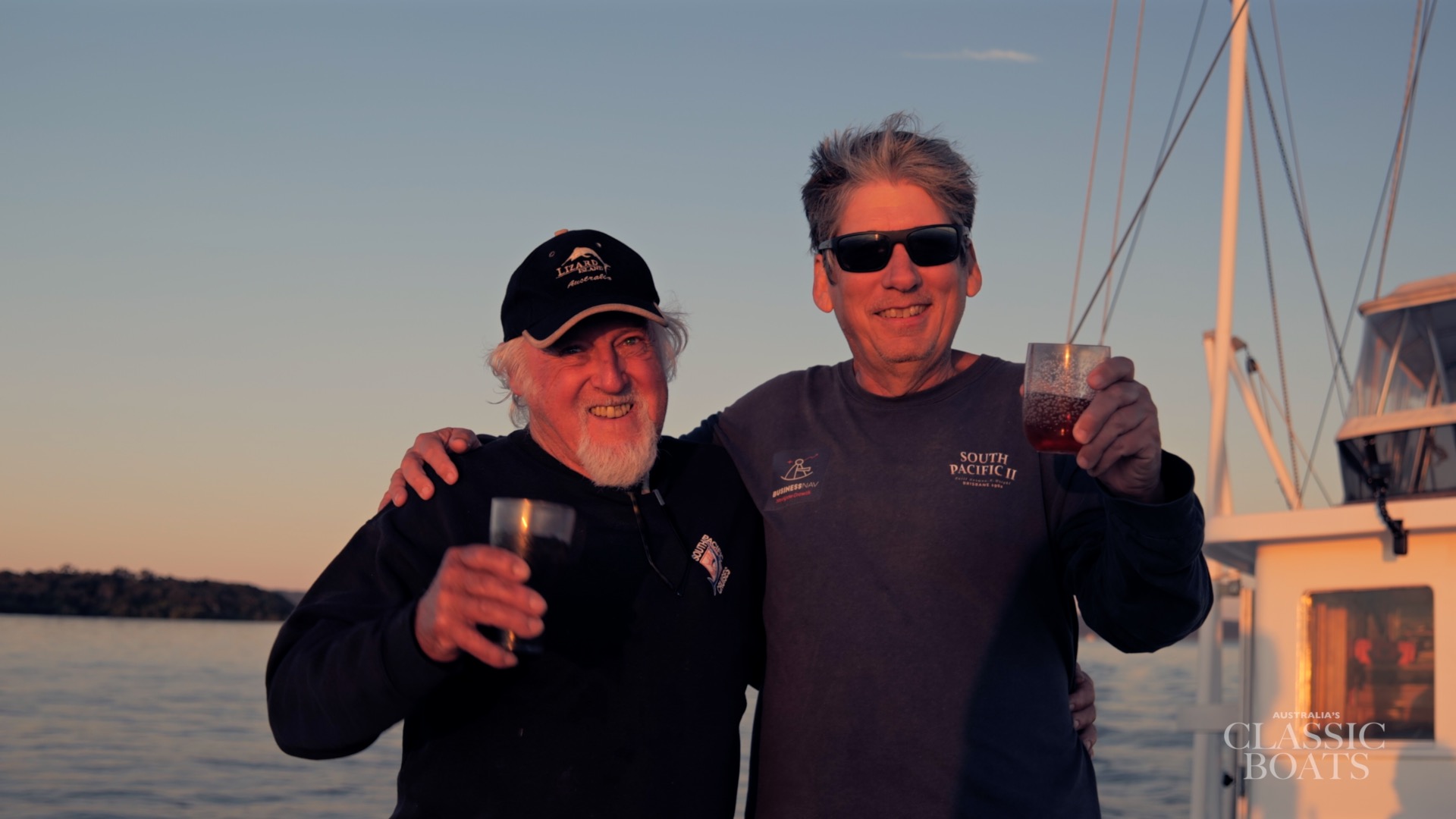
It was very meaningful when she was being sold because she, you know, came into my life when I was five and she was sold when I was about 50. So, you know, she was very much a huge part of my life.
We feel very fortunate that Rob was the guy who bought the boat too. Because he very much, you know, I mean, mutually beneficial, obviously. He loves having Dad on the boat and might get a few fishing spots.However, Dad gets to, you know, still be the master of his domain and be with the old girl that he’s so fond of. So, yeah, it’s lovely.
Rob Siganto:
It’s a real bonus. It wasn’t really part of the plan, but it just happened that way. And being able to spend, you know, five years on the water with Ron and learning his experiences and his adventures was just incredible.
The Sigantos’ purchase of SP2 also signalled a multi-generational baton change in skippers between the legend Ron Jenyns and a talented young gun, Jacob Oxlade.
Rob Siganto:
It’s a great transition from this legendary veteran of Ron to Jacob. And Jacob’s just grabbed it and really run with it. I’m a bit of a novice when it comes to the mechanical side of it, and most of the maintenance side of it to be honest!.. And Jacob’s just been able to pick it up and run with it. It’s been great.
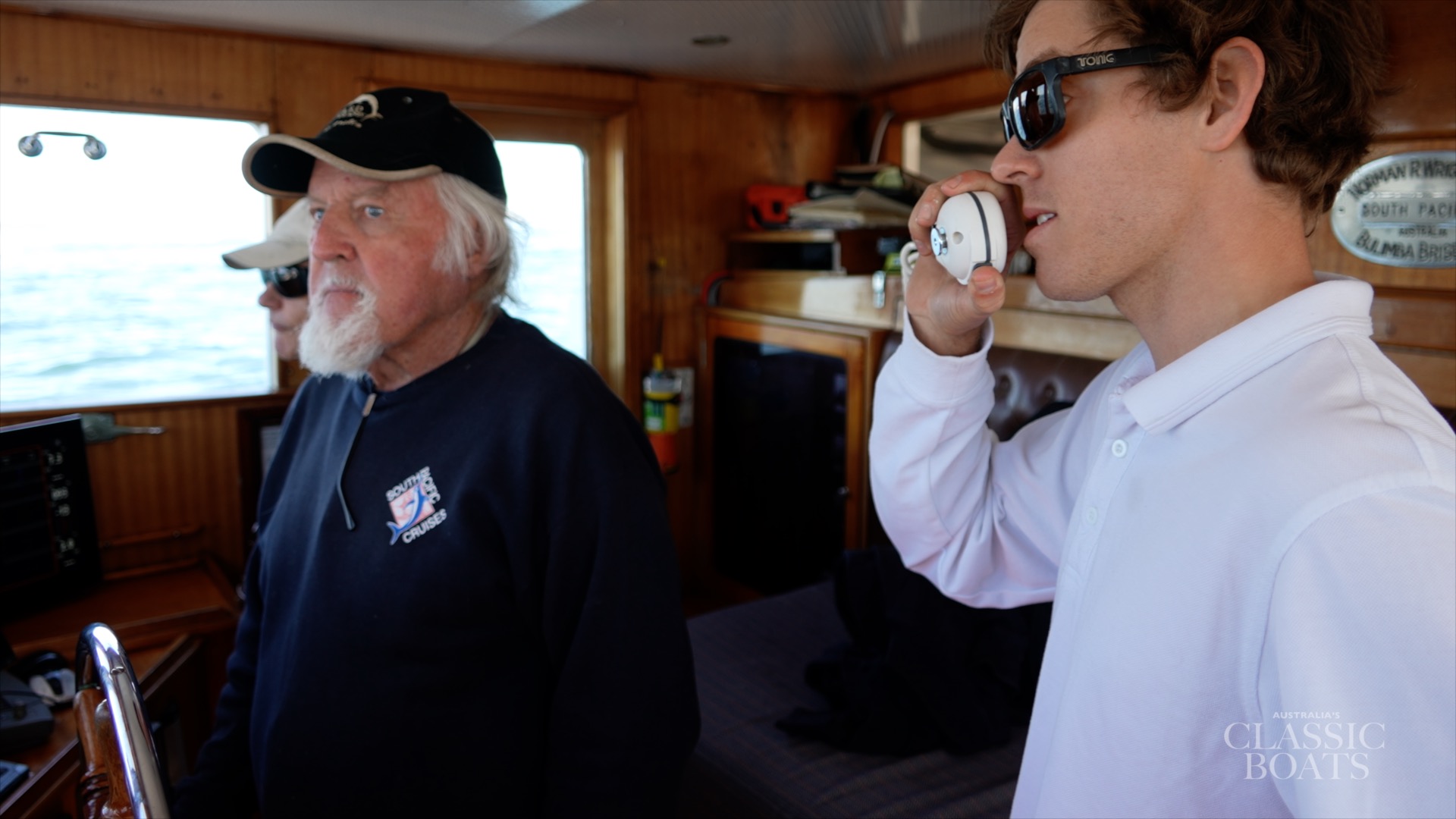
The Sigantos’ new custodianship saw the first of her refits, that included some key modifications to the layout of the boat. In 2023, the major restoration began at Norman Wright and Sons to secure her future for a new era. A journey Jacob will lead us through in the coming episodes.
Jacob Oxlade:
Rob, the owner, we’re so lucky to have him. The boat’s so lucky to have him. Allowing us to do all this work to the boat. Going from literally stem to stern on this refit. So she will be a better than new boat with all the upgrades we’re doing.
We want to keep the original look of the boat whilst moving forward with modern technology and modern products as well.
So begins the next phase in the sea-going life of this remarkable vessel.
Rob Siganto:
We’d like to do the standard season, We’ll be up the Queensland coast to the Whitsundays and Lizard Island.And then there’s a long bucket list of going to PNG, going to the Kimberleys’, going to Tasmania, going to Vanuatu. All these potential options are available to us to look at big long-distance sort of trips.
It’s got this incredible history of these adventures that it did with the Jenyns family of course. And that’s what we’re looking forward to is our own adventures. We’re taking it to the next generation of doing similar but different sorts of trips away and experiencing the same.
Upon completion, the South Pacific II will remain an enduring example of the best in Australian boating legend.
Sally Jenyns:
Someone on board one time said, “You can describe this boat as Poetry in Timber.” And I’ve never forgotten that. I think that was Peter Bristow. He said it was Poetry in Timber.
Bill Wright:
I’ve seen it in rough weather and off Noosa punching home. I just sat in the National Park and watched it slowly go by. It was magnificent to watch it at sea.